
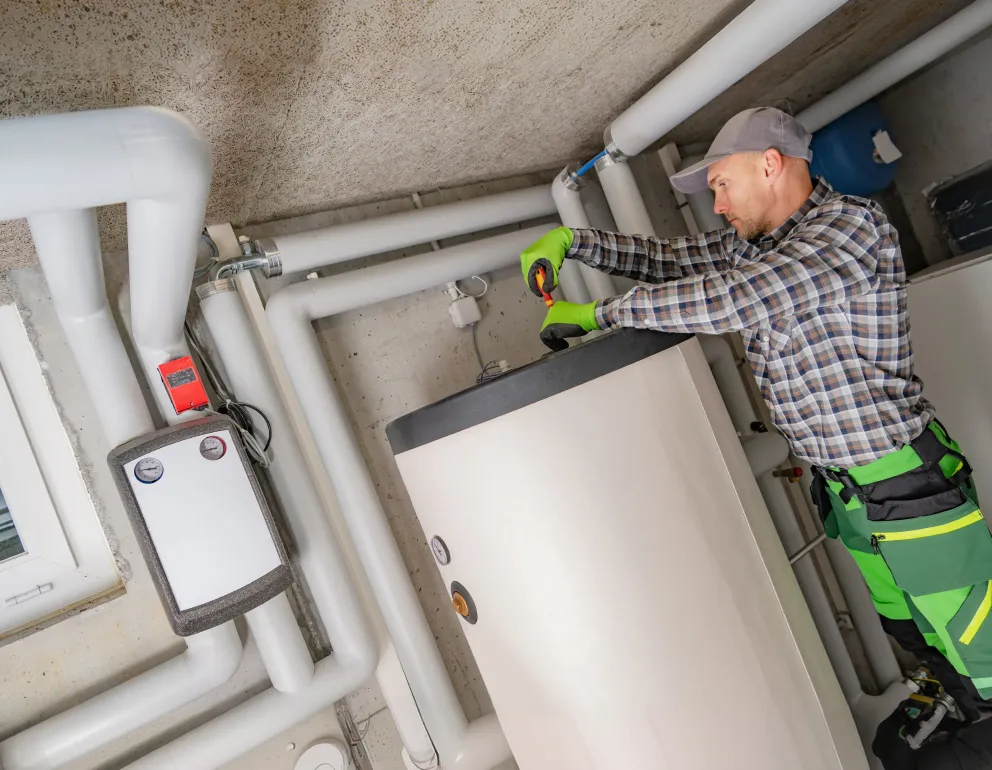
Every commercial facility depends on reliable hot water. Whether it’s an office building, healthcare facility, restaurant, school, or industrial operation, hot water plays an important role in day-to-day operations.
When it comes time to install or replace a water heating system, one of the most common questions is whether a traditional tank water heater or a tankless system is the better choice.
The answer depends on your facility’s usage, demand, and long-term goals.
Understanding the Difference Between Tank and Tankless Water Heaters
Traditional tank water heaters store and heat a large volume of water that remains ready for use throughout the day. Commercial systems can range significantly in size depending on the facility’s hot water demands.
As hot water is used, the system continuously reheats incoming water to maintain the desired temperature and supply.
Tankless water heaters operate differently. Rather than storing hot water, they heat water on demand as it moves through the system. When a fixture or appliance calls for hot water, the unit activates and heats the water as it passes through a heat exchanger.
Because there is no storage tank, energy is only used when hot water is needed.
Factors to Consider When Choosing a System
Hot Water Demand
The first consideration is how much hot water your facility uses on a daily basis.
Facilities with relatively low or intermittent demand may benefit from a tankless system. Office buildings, smaller commercial properties, and facilities with limited hot water usage often find tankless systems to be a practical solution.
Facilities with significant hot water demands may be better served by a traditional storage system or a properly engineered combination of storage and tankless equipment. Hospitals, schools, hotels, industrial facilities, and food service operations often require large volumes of hot water across multiple fixtures simultaneously.
Understanding peak demand periods is critical when evaluating system options.
Energy Efficiency
Tankless systems are often viewed as the more energy-efficient option because they only operate when hot water is needed.
Traditional tank systems continuously maintain water temperature, which can result in standby energy loss even when hot water is not actively being used.
For facilities focused on reducing energy consumption, tankless technology may offer long-term efficiency benefits depending on the building’s usage patterns.
Installation and Lifecycle Costs
While tankless systems can provide efficiency advantages, they often require a higher initial investment.
Traditional tank systems typically have lower upfront installation costs and may be a more economical solution for facilities with straightforward hot water requirements.
However, long-term operating costs, maintenance requirements, expected lifespan, and facility usage should all be considered when evaluating overall value.
Available Space
Mechanical room space can also influence system selection.
Tankless units generally require less physical space than large storage tanks, making them attractive for facilities where square footage is limited or mechanical rooms are already crowded.
Choosing the Right Solution for Your Facility
There is no one-size-fits-all answer when comparing tank and tankless water heaters.
The best solution depends on your building’s size, hot water demand, operational requirements, available space, and long-term goals.
At Bates Mechanical Plumbing, we help facility managers, property owners, and project teams evaluate their options and select systems that align with both current needs and future growth. Whether you’re replacing aging equipment or planning a new installation, our team can help ensure your water heating system is designed for reliable long-term performance.
Partner With Bates Mechanical Plumbing
Hot water systems are a critical part of keeping commercial facilities operational. Choosing the right equipment today can help reduce operating costs, improve reliability, and support your facility for years to come.
If you’re evaluating water heater replacement or planning a new installation, Bates Mechanical Plumbing can help you determine the best solution for your facility.